Unlocking the Evolutionary Secrets of Human Pigmentation
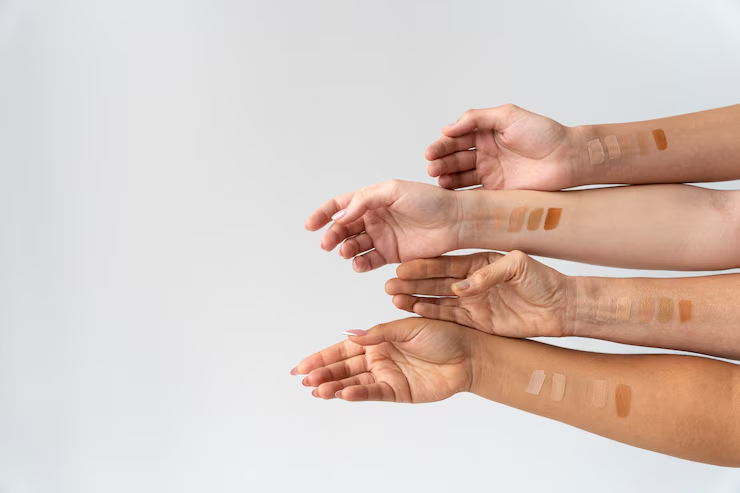
Skin tones have fascinated humans for centuries, sparking curiosity, conversation, and unfortunately, even controversy. But at the core of it all lies biology. The science behind different skin tones is rooted in evolution, genetics, and our body’s natural defense mechanisms. Let’s explore how your skin tone is not just about appearance, but also a result of adaptation and function.
Melanin: The Key Player in the Science Behind Different Skin Tones
The pigment responsible for the color of our skin is called melanin. Specialized cells in the skin, known as melanocytes, produce melanin in varying amounts. People with darker skin produce more melanin, particularly a type called eumelanin, which is more effective at blocking harmful ultraviolet (UV) rays from the sun.
Interestingly, this difference in melanin production is not random—it’s evolutionary. Populations closer to the equator developed darker skin tones as a natural protection against intense sun exposure. On the other hand, lighter skin evolved in regions with lower UV radiation, allowing the body to efficiently produce vitamin D from sunlight.
Genetics and Geography: How They Shape the Science Behind Different Skin Tones
While melanin plays the starring role, your genes direct the production of this pigment. Variants in genes such as MC1R, SLC24A5, and OCA2 influence how much melanin your body produces. These genetic traits pass down through generations, influenced heavily by geography.
What’s more, skin tone diversity is a perfect example of how humans have adapted to their environments over thousands of years. Transitioning from one region to another, our ancestors’ skin tones evolved to strike the perfect balance between sun protection and vitamin D production.
Understanding the science behind different skin tones helps us appreciate the beautiful spectrum of human diversity. Beneath the surface, our skin tells a powerful story of biology, adaptation, and survival. It’s not just about color—it’s about how our bodies have evolved to thrive in a changing world.
NOTE: – IT IS ALWAYS RECOMMENDED TO CONSULT YOUR HEALTH CARE PROFESSIONAL. ALL DATA SHARED HERE ARE FOR EDUCATIONAL PURPOSES ONLY.