
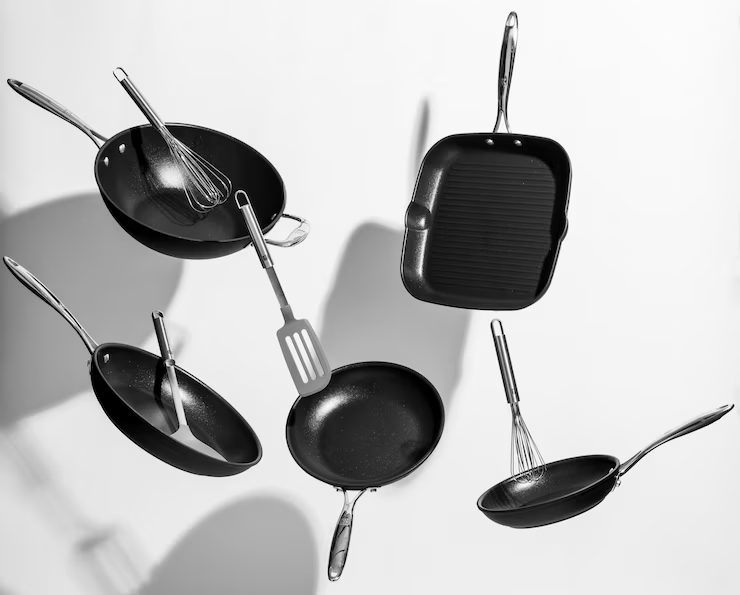
Understand the health risks and smart usage of non-stick pans
When it comes to convenience in the kitchen, non-stick pans are a go-to choice for many home cooks. But one question often arises — Non-Stick Cookware: Safe or Risky? While these pans reduce oil usage and simplify cleaning, they may pose health risks if not used or maintained properly. Understanding the science behind non-stick coatings is key to safer cooking.
Most non-stick pans use a coating called PTFE (commonly known as Teflon). When overheated—especially above 260°C (500°F)—this coating can break down and release toxic fumes. Additionally, scratched surfaces may expose the underlying metal or cause tiny particles to mix with food, which can be harmful in the long run.
How Non-Stick Cookware: Safe or Risky Becomes a Real Concern
Most non-stick cookware uses a coating called polytetrafluoroethylene (PTFE), commonly known as Teflon. This material is safe at low to medium temperatures. However, when heated above 260°C (500°F), it begins to break down and release toxic fumes. These fumes can cause symptoms like headaches, nausea, and even flu-like conditions known as “Teflon flu.”
Moreover, once the coating gets scratched or starts peeling, chemical particles are more likely to mix with food. Although occasional ingestion might not be immediately harmful, repeated exposure can be a long-term health concern.
Using Non-Stick Cookware: Safe or Risky Depends on You
To minimize risk, follow these simple tips:
- Always cook on low to medium heat
- Avoid metal utensils; use silicone or wooden ones
- Replace pans that are scratched or flaking
- Never preheat an empty non-stick pan
- Opt for PFOA-free certified cookwareIf you want to play it even safer, explore alternatives like cast iron, ceramic, or stainless steel, which do not carry the same chemical risks.
Healthcare Note:
While non-stick cookware is generally safe under proper conditions, repeated exposure to damaged coatings and high heat can impact long-term health. Always prioritize cookware safety in your kitchen routine.