How Biomarkers Are Revolutionizing Early Parkinson’s Detection
Parkinson’s disease is often diagnosed after noticeable symptoms like tremors, stiffness, and slow movement appear. However, scientists are making breakthroughs in identifying the disease much earlier. New advances in early Parkinson’s detection focus on subtle biological markers and innovative testing methods, offering hope for earlier intervention and better treatment outcomes.
How New Advances in Early Parkinson’s Detection Improve Diagnosis
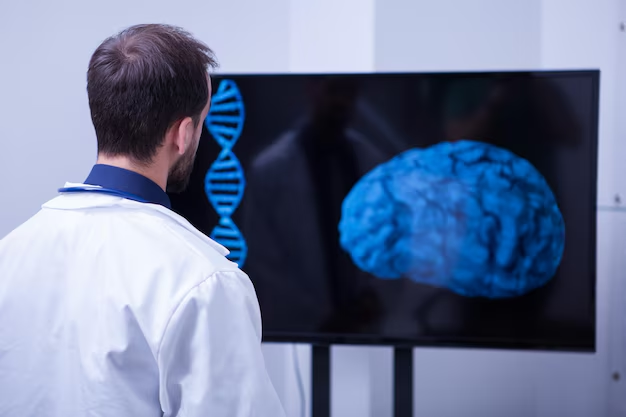
Traditionally, Parkinson’s diagnosis relies on physical symptoms, but new research suggests that early changes in the brain and body occur years before symptoms start. Cutting-edge techniques like AI-powered brain scans, blood tests, and skin biopsies are helping doctors detect these early warning signs. Identifying Parkinson’s sooner allows for better treatment planning and may slow disease progression.
Biomarkers: A Key Factor in New Advances in Early Parkinson’s Detection
Biomarkers—measurable biological changes—are transforming how doctors detect Parkinson’s. Scientists have identified specific proteins in cerebrospinal fluid and blood that signal early Parkinson’s. Additionally, researchers are studying changes in gut bacteria, since digestive issues can appear years before movement-related symptoms. These discoveries provide new ways to diagnose Parkinson’s long before traditional methods can.
The Future of Early Parkinson’s Diagnosis
With advancements in artificial intelligence, genetic testing, and wearable technology, detecting Parkinson’s early is becoming more accurate and accessible. AI can analyze brain scans to spot tiny abnormalities, while smartwatches and motion sensors can track subtle movement changes. These innovations could soon make early Parkinson’s detection routine, leading to earlier treatments and better quality of life for patients.
Conclusion
Early detection is crucial for managing Parkinson’s effectively. Thanks to new advances in early Parkinson’s detection, doctors can now identify the disease years before symptoms appear. With ongoing research and technological improvements, the future looks promising for early diagnosis and improved treatment options.
NOTE: – IT IS ALWAYS RECOMMENDED TO CONSULT YOUR HEALTH CARE PROFESSIONAL. ALL DATA SHARED HERE ARE FOR EDUCATIONAL PURPOSES ONLY.