
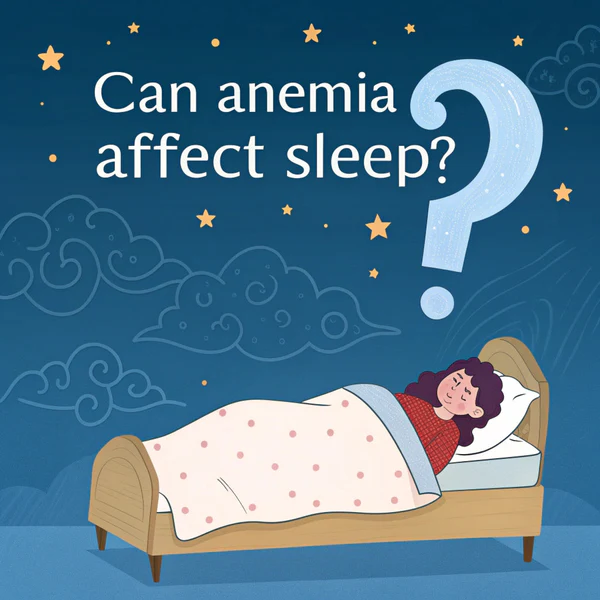
Can Anemia Affect Sleep?

Sleep is essential for healing and energy, yet many people struggle with poor sleep without
knowing the real cause. Can anemia affect sleep? Yes, it absolutely can. Anemia reduces thenumber of healthy red blood cells or hemoglobin in the body. As a result, your blood carries less
oxygen to your tissues and brain. Because of this oxygen shortage, your body stays in a constant
state of fatigue and stress, which directly interferes with deep, restful sleep.


When hemoglobin levels drop, people often feel exhausted during the day but still find it difficult

to sleep at night. Moreover, anemia can trigger symptoms like restless legs, frequent waking,

headaches, and shortness of breath. Consequently, the sleep cycle gets disturbed, and the body

never fully recovers.


Can Anemia Affect Sleep Patterns and Quality?


Yes, can anemia affect sleep quality is one of the most searched questions for a reason. Iron

deficiency anemia, in particular, often causes restless leg syndrome (RLS). This condition

creates an uncontrollable urge to move the legs, especially at night. As a result, falling asleep

becomes harder and sleep breaks repeatedly.


Additionally, low oxygen levels make the heart work harder. Therefore, some people experience

rapid heartbeat or anxiety at night. Over time, poor sleep further weakens immunity, reduces

focus, and worsens fatigue—creating a vicious cycle.


Can Anemia Affect Sleep and How Can You Fix It?


If you’re wondering can anemia affect sleep and how to improve it, the good news is that lifestyle

and diet changes can help significantly.


1. Improve Iron-Rich Nutrition

Include iron-rich foods like spinach, lentils, dates, beetroot, and jaggery. Pair them with vitamin C

sources such as lemon or amla to boost absorption.


2. Add iZaG Moringa Powder to Your Routine

iZaG Moringa Powder is a natural, plant-based superfood rich in iron, vitamin C, and essential

minerals. Taken daily, it supports healthy hemoglobin levels, improves oxygen flow, and helps

reduce fatigue—thereby supporting better sleep naturally.


3. Maintain a Sleep-Friendly Lifestyle

Avoid caffeine late in the evening, stay hydrated, and follow a consistent sleep schedule. Gentle

evening walks or breathing exercises also improve oxygen circulation.


In conclusion, anemia doesn’t just cause weakness—it can silently disturb your sleep. By

addressing nutritional gaps and choosing natural support like iZaG Moringa Powder, you can

restore both energy and restful sleep.

Share:

Leave your thought here

Your email address will not be published.