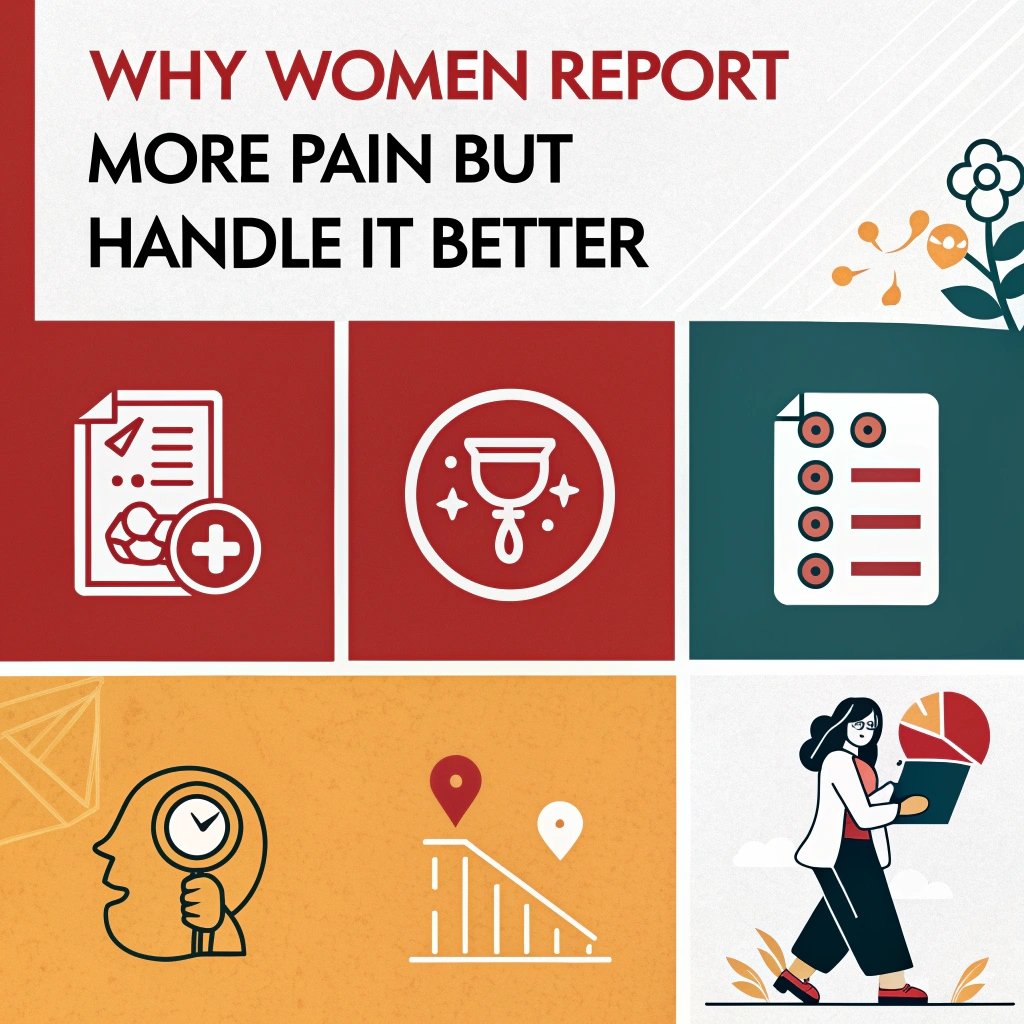
Why Women Report More Pain but Handle It Better
When it comes to pain, women consistently report feeling it more often and more intensely than men. However, research shows they also tend to cope with it more effectively. This surprising dynamic raises a powerful question: why do women report more pain but handle it better? Science, hormones, and even social conditioning all play a role in this complex but fascinating difference.
Why Women Report More Pain but Handle It Better: The Biological Factor
Women’s bodies experience frequent and recurring pain, such as menstrual cramps, childbirth, and hormonal migraines. Estrogen, a key female hormone, can increase the sensitivity of pain receptors. On the other hand, men often have higher levels of endorphins, the body’s natural painkillers. Despite this, women show greater pain endurance in studies, possibly due to their brain processing pain differently — often with more emotional regulation and stronger long-term coping mechanisms.
In fact, brain scans reveal that both activate different regions of the brain when exposed to the same painful stimulus. This suggests that pain is not just about the sensation itself, but also how the brain responds to and manages it over time.
Why Women Report More Pain but Handle It Better: Social and Psychological Strength
Social conditioning also plays a major role. From a young age, women are taught to manage discomfort quietly — whether it’s emotional pain or physical suffering. This expectation builds emotional resilience, which in turn helps them manage pain without always outwardly showing it. Moreover, women are more likely to seek support, communicate about their symptoms, and follow up on treatment, leading to better coping outcomes.
Men, by contrast, are often encouraged to suppress pain, which can lead to underreporting and delayed care.
In Conclusion
Why women report more pain but handle it better is not just a medical question — it reflects biology, psychology, and society. Recognizing these differences helps promote empathy, better healthcare, and stronger support systems for both.
NOTE: – IT IS ALWAYS RECOMMENDED TO CONSULT YOUR HEALTH CARE PROFESSIONAL. ALL DATA SHARED HERE ARE FOR EDUCATIONAL PURPOSES ONLY.