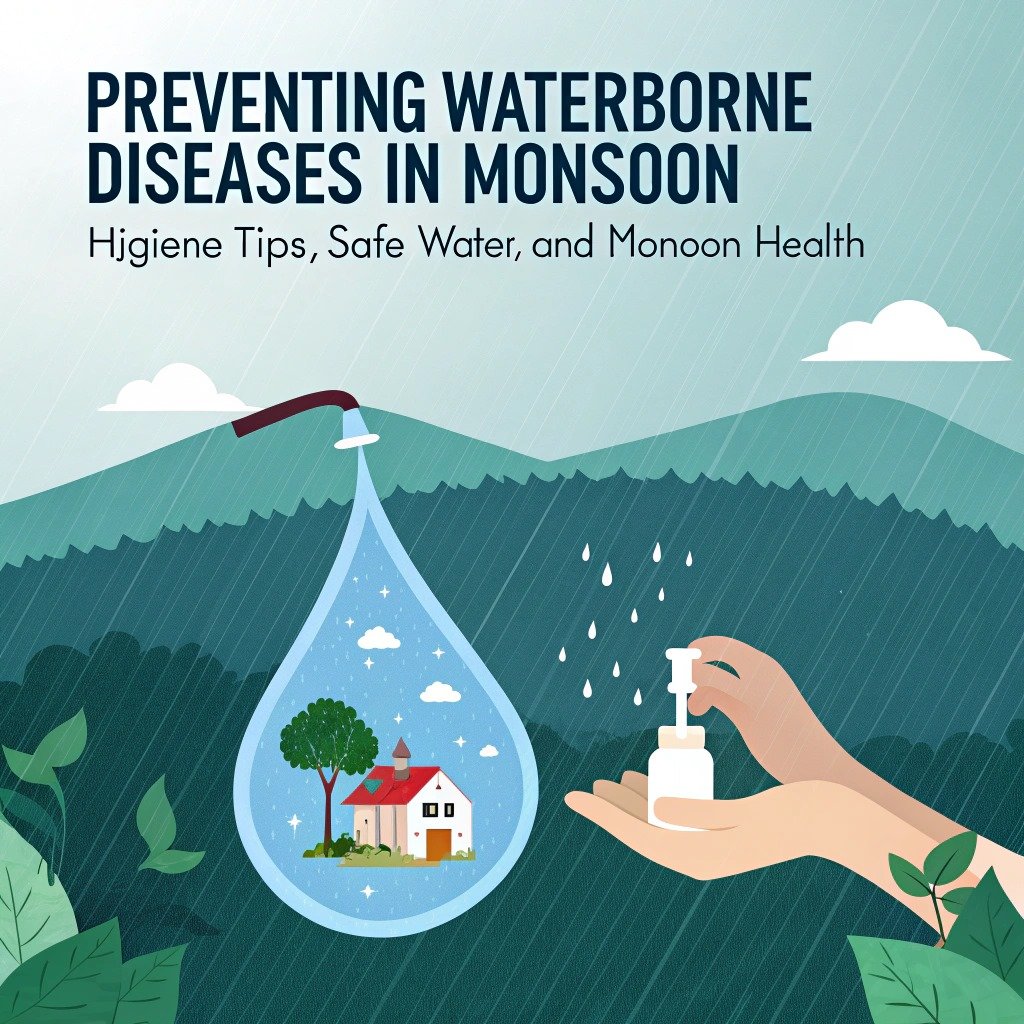
Hygiene Tips, Safe Water, and Monsoon Health
The rainy season brings much-needed relief from summer heat, but it also creates the perfect environment for infections to spread. Preventing Waterborne Diseases in Monsoon becomes critical as flooding, waterlogging, and poor sanitation increase the risk of illnesses like typhoid, cholera, hepatitis A, and diarrhea. These diseases are mainly transmitted through contaminated water or food and can spread rapidly, especially in densely populated areas. According to the Ministry of Health and Family Welfare, India sees a surge in such illnesses during every monsoon.
Hygiene Tips for Preventing Waterborne Diseases in Monsoon
One of the most effective strategies for Preventing Waterborne Diseases in Monsoon is practicing strict personal hygiene. Always wash your hands with soap and clean water before meals and after using the toilet. Boil drinking water or use water purifiers and avoid consuming food from street vendors. It’s important to wash fruits and vegetables thoroughly with clean water before use.
Keep your surroundings clean and ensure that drains are not clogged. Disinfect water storage containers weekly with diluted bleach. The National Centre for Disease Control (NCDC) recommends storing drinking water in covered, narrow-mouthed containers to prevent contamination.
Safe Practices to Support Preventing Waterborne Diseases in Monsoon
Another important aspect of Preventing Waterborne Diseases in Monsoon is maintaining food safety. Cook food thoroughly, especially meat and seafood. Reheat stored food before eating, and always check for foul odors or discoloration. Avoid raw or undercooked food items during the rainy season.
Additionally, prevent mosquito breeding by avoiding stagnant water accumulation around your home. Even though it’s primarily a waterborne disease prevention campaign, reducing mosquito exposure supports overall public health, as rain-related infections often overlap.
Healthcare Note:
The Government of India regularly issues monsoon health advisories and provides free vaccinations for hepatitis in high-risk areas. Take full advantage of these programs, stay hydrated, and seek medical attention promptly if symptoms like diarrhea, fever, or vomiting appear.