
Understanding ECG vs. Echo: What’s the Difference in Function
When it comes to diagnosing heart conditions, two tests often come up: the ECG and the echocardiogram. While they both focus on heart health, they serve very different purposes. If you’re wondering ECG vs. Echo: What’s the Difference?, you’re not alone. Let’s break it down clearly.
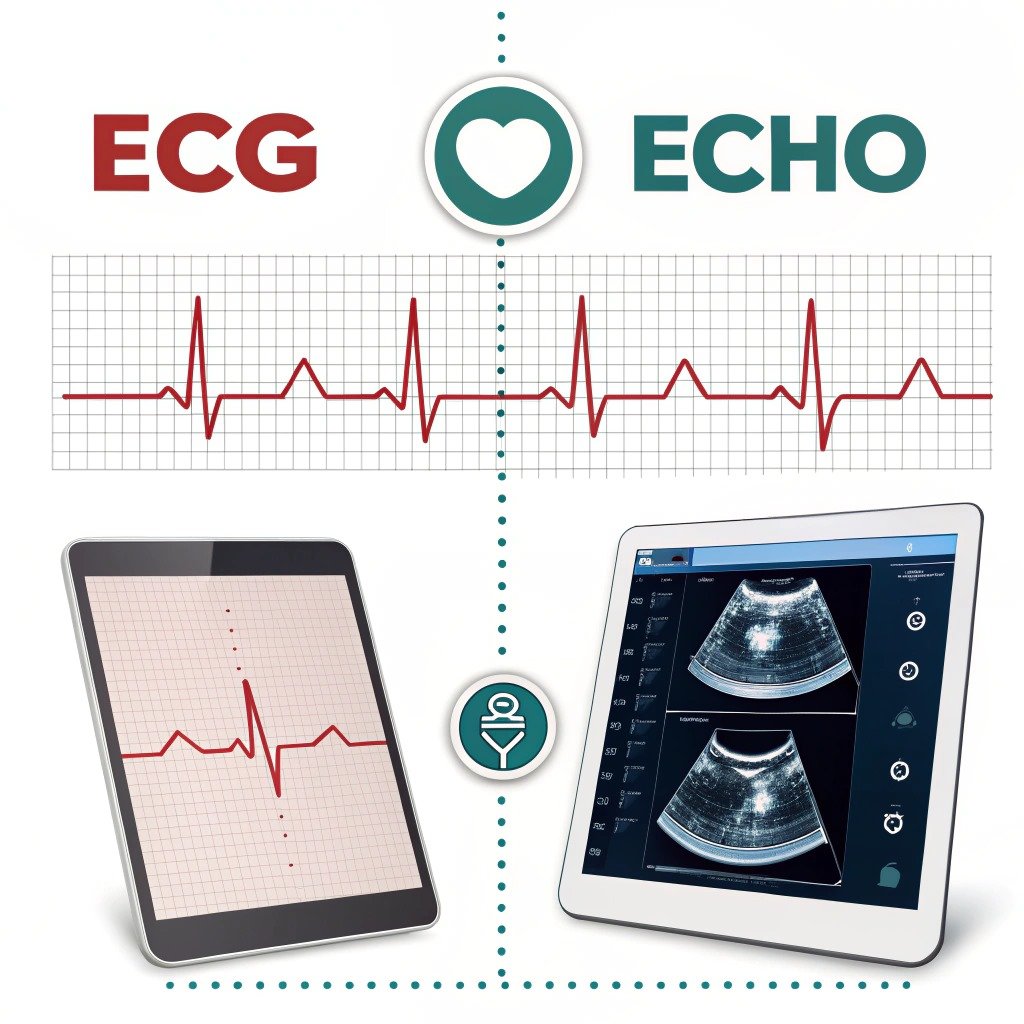
An ECG (Electrocardiogram) measures the electrical activity of your heart. It uses small sensors placed on your skin to detect and record the timing and strength of your heartbeats. This test is quick, painless, and often done in just a few minutes. It’s commonly used to detect arrhythmias, heart attacks, and irregular heart rhythms.
On the other hand, an Echo (Echocardiogram) is an ultrasound of the heart. It shows a live, moving image of your heart’s structure and how it’s pumping. Echo can reveal things ECG cannot—such as valve problems, chamber size, blood clots, and fluid around the heart. It’s especially useful in diagnosing heart failure and structural issues.
What’s the Difference in Use Cases
Understanding ECG vs. Echo: What’s the Difference in real clinical scenarios is important. Doctors may order an ECG if you’re experiencing chest pain, palpitations, or dizziness. It’s often the first line of investigation because of its speed and efficiency.
However, when structural abnormalities are suspected—such as leaky valves, weakened heart muscles, or congenital heart defects—an echocardiogram gives more detailed insights. Sometimes, both tests are used together to provide a fuller picture of heart health.
In summary, ECG tells you how your heart beats, while an echo shows you how well your heart works. Both are valuable, but they answer different questions.
🩺 Healthcare Note:
Always follow your doctor’s advice on which heart test is needed. Early diagnosis can prevent serious complications.