Exploring the Truth Behind Carrots & Eye Health: Myth or Fact?
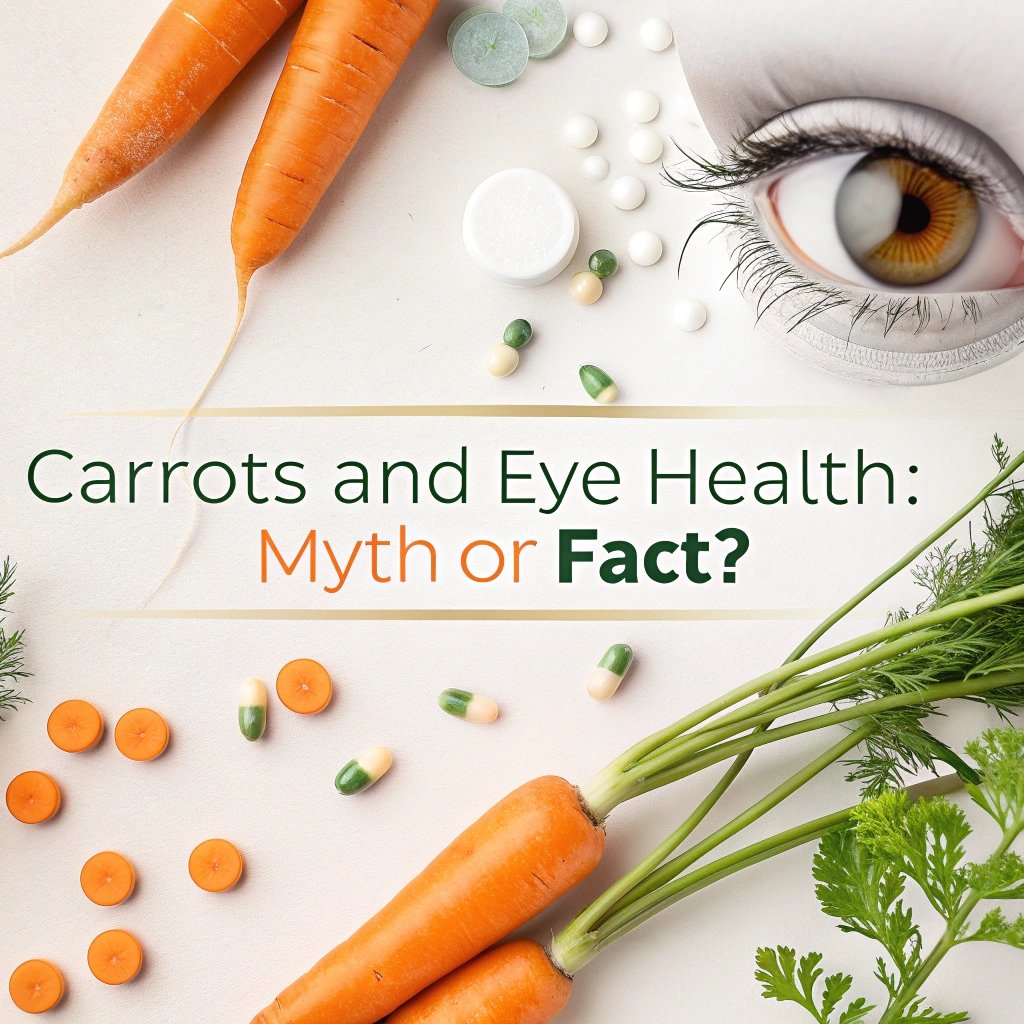
We’ve all heard the old saying: “Eat your carrots to improve your eyesight.” But in today’s world of evidence-based health advice, it’s time to ask—Carrots & Eye Health: Myth or Fact? Surprisingly, there is truth to the claim, but not in the way many of us assume. Carrots are rich in beta-carotene, a plant pigment that the body converts into vitamin A—an essential nutrient for maintaining normal vision.
Vitamin A helps form rhodopsin, a pigment in the retina that allows us to see in low light. A deficiency in vitamin A can lead to night blindness and, in severe cases, permanent vision loss. Therefore, carrots can help preserve vision—but they won’t give you superhuman sight or reverse eye conditions like myopia or cataracts.
Carrots & Eye Health: Myth or Fact in Scientific Perspective
So, when it comes to Carrots & Eye Health what does science say? The answer lies in moderation and balance. Carrots are one of many vegetables that support eye health. Leafy greens like spinach and kale contain lutein and zeaxanthin, antioxidants known to reduce the risk of age-related macular degeneration.
It’s also worth noting that too much beta-carotene won’t boost vision further and might even cause the skin to turn orange temporarily—a harmless condition known as carotenemia. This proves that while carrots are beneficial, they aren’t a magic fix for all eye problems.
Carrots in Daily Diet
To truly support your vision, focus on a balanced diet rich in a variety of nutrients—not just carrots. Include foods with omega-3s (like flaxseeds), zinc (like legumes), and vitamin C (like oranges). Hydration and regular eye check-ups also play a vital role in long-term eye care.
In conclusion, Carrots & Eye Health It’s part myth, part fact. Carrots do help, but they’re just one piece of a much larger puzzle.
Healthcare Note:
If you experience any vision issues, consult an ophthalmologist. Nutrition helps maintain eye health, but it cannot replace medical intervention when needed.