A Natural Spice with Promising Effects on Insulin Sensitivity
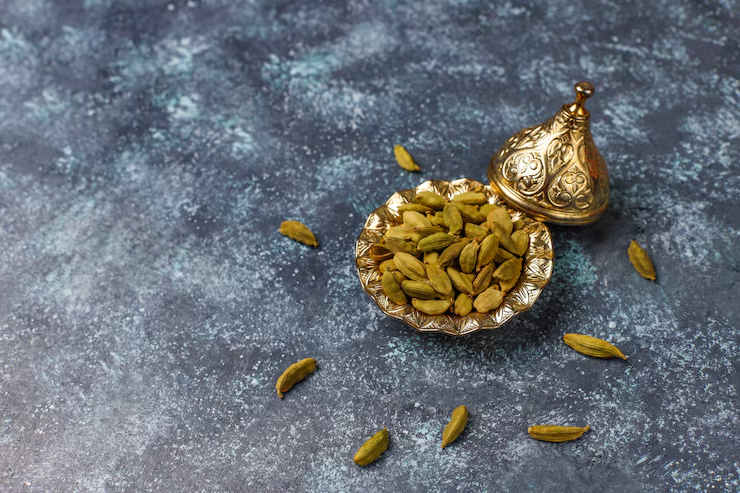
Cardamom, often praised as the “queen of spices,” not only enhances flavor in the kitchen but also shows promise as a natural remedy for insulin resistance. This condition, which often precedes type 2 diabetes, develops when the body’s cells stop responding effectively to insulin, causing blood sugar levels to rise. Fortunately, emerging research highlights that cardamom may help boost insulin sensitivity and support overall metabolic health, making it a valuable addition to preventive strategies.
Cardamom for Insulin Resistance: Insights from Clinical Studies
Several clinical trials have explored how cardamom supplementation affects metabolic health. For example, in a randomized controlled trial involving higher weight pre-diabetic women, participants took 3 grams of green cardamom daily for eight weeks. As a result, researchers observed a clear reduction in total cholesterol and LDL-C levels. More importantly, insulin sensitivity improved significantly.
Similarly, another study focused on patients with type 2 diabetes. After supplementing with cardamom, participants experienced notable drops in hemoglobin A1c (HbA1c), insulin levels, and triglycerides. These findings suggest that cardamom may enhance glycemic control while also supporting better lipid metabolism.
Potential Mechanisms: How Cardamom Influences Insulin Resistance
Cardamom offers powerful benefits for insulin resistance, thanks to its rich concentration of bioactive compounds like polyphenols and flavonoids. These compounds deliver strong antioxidant and anti-inflammatory effects, which help reduce oxidative stress and chronic inflammation—two key contributors to insulin resistance. Moreover, research shows that cardamom actively improves lipid profiles by lowering total cholesterol and LDL-C levels, which further enhances overall metabolic health.
That said, it’s important to view cardamom as a supportive addition, not a replacement for medical treatment. To get the most out of its benefits, include cardamom as part of a balanced diet, stay physically active, and follow your healthcare provider’s guidance. By combining these lifestyle choices, you can take more effective steps toward managing insulin resistance and protecting long-term health.
NOTE: – IT IS ALWAYS RECOMMENDED TO CONSULT YOUR HEALTH CARE PROFESSIONAL. ALL DATA SHARED HERE ARE FOR EDUCATIONAL PURPOSES ONLY.
References:
https://pubmed.ncbi.nlm.nih.gov/35691204/?utm_source=chatgpt.com
https://pubmed.ncbi.nlm.nih.gov/29026804/?utm_source=chatgpt.com
https://pubmed.ncbi.nlm.nih.gov/30701554/?utm_source=chatgpt.com
https://pmc.ncbi.nlm.nih.gov/articles/PMC9753872/?utm_source=chatgpt.com