
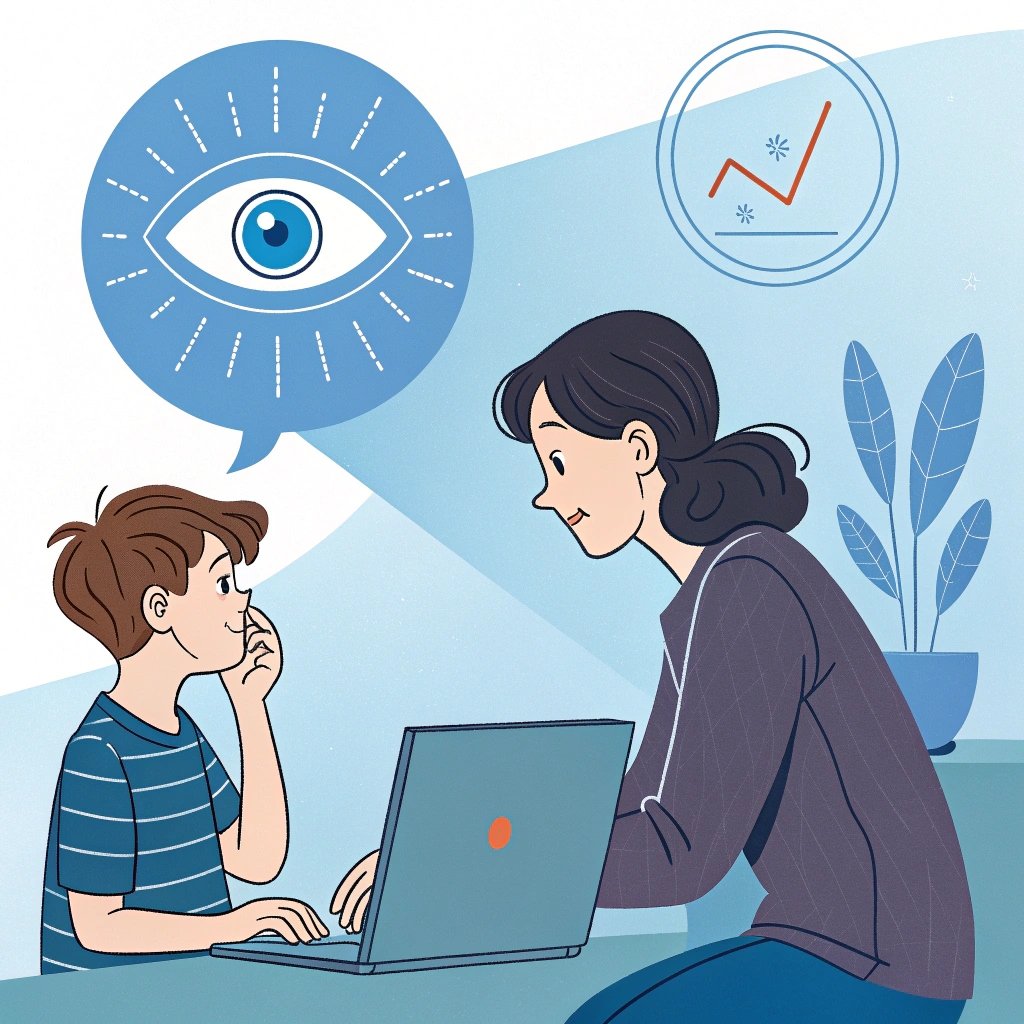
Simple Daily Eye Care Tips
Can Screen Time Affect Eyesight Permanently? Many people wonder if their hours staring at screens will lead to lasting damage. In the short term, screens often cause digital eye strain—symptoms like tired eyes, blurry vision, dry eyes, and headaches are common, and they typically resolve with rest, as reported in The National Institutes of Health (NIH) journal on computer vision syndrome. However, experts note that permanent effects may arise—especially related to myopia and refractive errors—depending on age and screen habits.
Can Screen Time Affect Eyesight Permanently? — Myopia & Refractive Risks
Research from the Harvard School of Public Health and University of New South Wales highlights that myopia (nearsightedness) is rising dramatically worldwide, with near-work and screen exposure identified as major contributing factors. In fact, studies warn that half of the global population could be myopic by 2050. Once myopia develops in childhood, it becomes irreversible because the eyeball elongates and does not return to its original shape.
Furthermore, a hospital-based study published by the National Library of Medicine found that increased screen time in children correlated with higher risks of astigmatism and tear film instability, both of which can affect vision long term. Another child-cohort study revealed that early exposure to screens during infancy and toddler years significantly increased future risk of astigmatism, confirming the importance of early prevention.
Can Screen Time Affect Eyesight Permanently? — Prevention & Healthy Habits
To reduce risk, experts recommend the 20-20-20 rule: every 20 minutes, look at something 20 feet away for 20 seconds. The American Optometric Association supports this approach to minimize digital strain. Moreover, research from the University of Michigan’s Institute for Healthcare Policy and Innovation shows that spending more time outdoors helps slow myopia progression by allowing the eyes to focus naturally and receive balanced light exposure.
For children, the World Health Organization (WHO) recommends less than 2 hours of recreational screen time daily, and none at all for children under two years. Regular eye examinations are also vital, as advised by the American Academy of Ophthalmology, to detect issues early and prevent long-term consequences.
Summary
In summary, Can Screen Time Affect Eyesight Permanently? Evidence shows that while digital strain is usually temporary, extended exposure—especially in childhood—can lead to irreversible conditions like myopia and astigmatism. By limiting screen time, taking regular breaks, spending more time outdoors, and following global health guidelines, you can safeguard your vision and reduce the risk of permanent changes.
Healthcare Note:
This article shares evidence-based information on eye health. However, if you or your child experience persistent eye strain, blurred vision, or headaches, consult an eye specialist promptly. Early medical evaluation helps prevent long-term vision problems.