Healthy Fats vs Bad Fats in Everyday Foods?
Fats often get a bad reputation, but not all fats are the same. When you ask What Are Healthy Fats vs Bad Fats?, it’s really about choosing fats that support your body rather than harm it. In fact, according to WHO, total fat intake for most people should stay below 30 % of energy, with saturated fats limited to under 10 % and trans‑fats to less than 1 %.
Healthy Fats: The Good Players
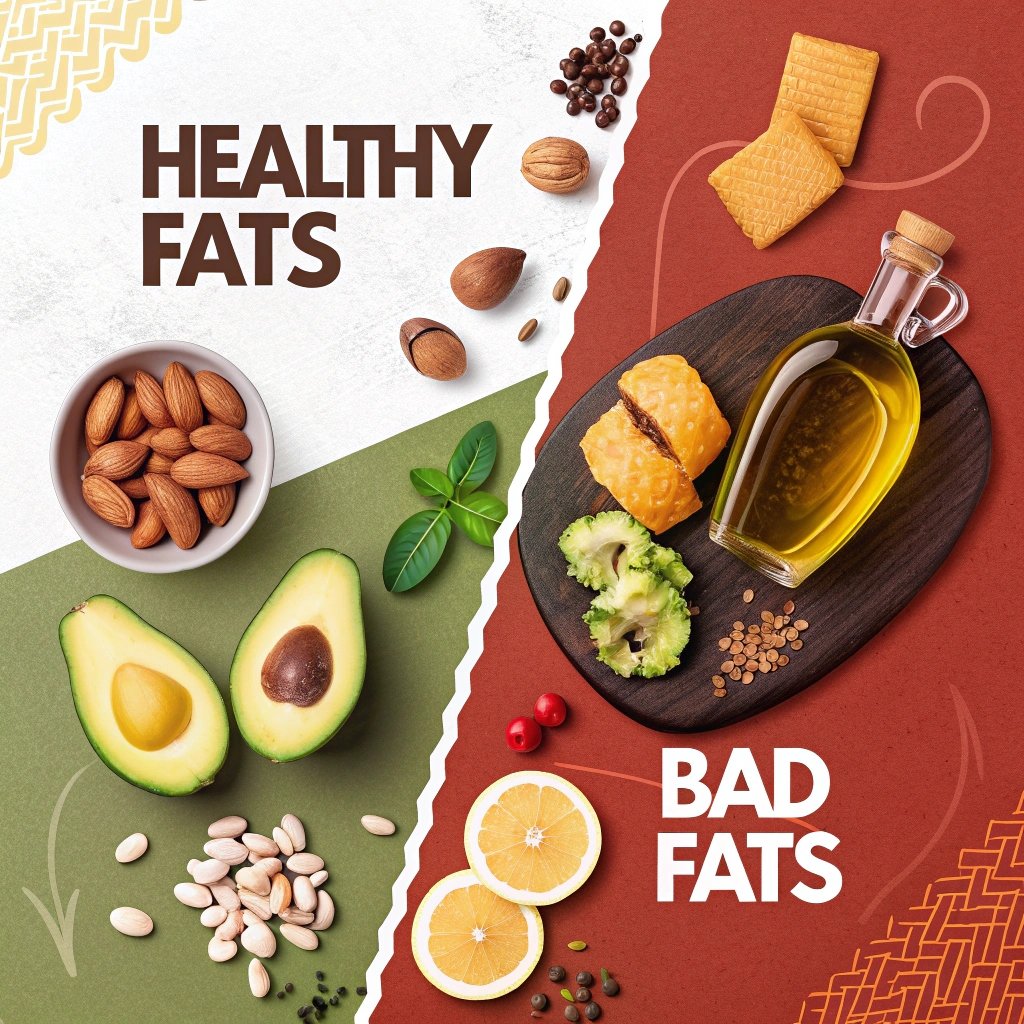
When distinguishing What Are Healthy Fats vs Bad Fats?, the “healthy” ones are mostly unsaturated fats — monounsaturated (MUFA) and polyunsaturated (PUFA). These fats remain liquid at room temperature and are found in plant oils (olive, canola, sunflower), nuts, seeds, and fatty fish.
These fats help lower LDL (bad cholesterol) and may improve HDL (good cholesterol). In particular, omega‑3 fatty acids (a subclass of PUFA) have been shown to reduce inflammation, support heart health, and improve blood lipid profiles.
Replacing saturated and trans fats with unsaturated fats is a core recommendation in global and government health guidelines. For example, WHO’s updated guidance emphasizes shifting fat consumption toward unsaturated fatty acids.
Bad Fats: What to Avoid
On the flip side, bad fats include saturated fats (in excess) and trans fats.
- Saturated fats are typically solid at room temperature and come from animal sources (fatty meats, full‑fat dairy, butter) and tropical oils (coconut, palm). Consuming too much saturated fat can raise LDL cholesterol, increasing risk of heart disease.
- Trans fats are especially harmful. These are often industrially produced by hydrogenation and are used in fried foods, baked goods, margarine, and processed snacks. Trans fats raise LDL and lower HDL, triggering inflammation and raising the risk of cardiovascular disease even at small amounts. WHO and many governments strive to eliminate industrial trans fats.
Globally, governments now recommend keeping trans fats under 1 % of total energy intake.
Practical Tips: Embrace Healthy Fats, Limit Bad Ones
- Use olive, canola, or sunflower oil for cooking instead of butter, ghee, or palm oil.
- Eat fatty fish (salmon, mackerel, sardines) 2–3 times a week for omega‑3.
- Snack on nuts and seeds instead of chips or packaged biscuits.
- Choose lean cuts of meat and dairy products with lower fat content.
- Read labels carefully — avoid foods with “partially hydrogenated oils” or high saturated fat content.
In conclusion, understanding healthy fats vs. Bad Fats. empowers you to make better food choices. Favor unsaturated fats from plants and fish, and keep saturated and trans fats in check. With smart swaps and awareness, you can support heart health, cholesterol balance, and overall well‑being.