A closer look at how spirulina could fuel the future of space travel”
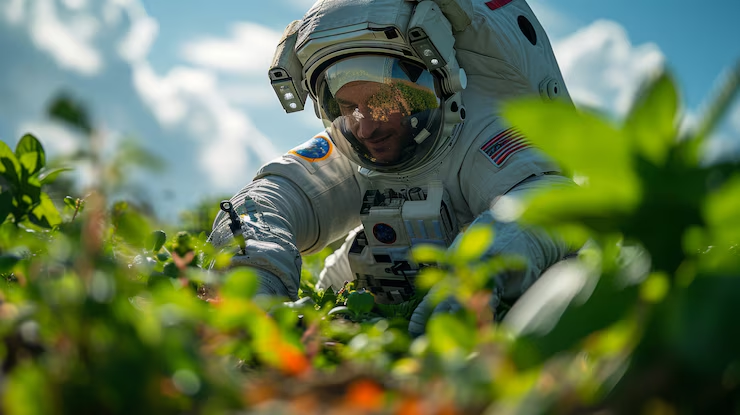
Spirulina, a nutrient-rich cyanobacterium, has garnered significant attention from space agencies, including NASA, for its potential role in supporting long-duration space missions. Its exceptional nutritional profile, coupled with its ability to produce oxygen and recycle carbon dioxide, makes it an ideal candidate for sustaining astronaut health in the challenging environment of space. This prompts the question: Why is NASA growing spirulina for astronauts?
Why NASA Is Growing Spirulina for Astronauts: A Sustainable Solution
NASA’s interest in spirulina stems from its multifaceted benefits. Not only is it a complete protein source, containing all essential amino acids, but it also boasts high levels of vitamins, minerals, and antioxidants. These properties are crucial for maintaining astronaut health during extended missions, where traditional resupply is not feasible. Moreover, spirulina’s photosynthetic capabilities allow it to convert carbon dioxide into oxygen, addressing both nutritional and life support needs.NASA Technical Reports Server+1nutrigien.com+1
The European Space Agency’s MELiSSA (Micro-Ecological Life Support System Alternative) project has also explored spirulina’s potential in closed-loop life support systems, highlighting its role in oxygen production and waste recycling. PMC+4MDPI+4PMC+4
Why NASA Is Growing Spirulina for Astronauts: Research and Implementation
NASA’s “Space Algae-2” project focuses on cultivating Arthrospira platensis (spirulina) aboard the International Space Station (ISS). This research aims to assess spirulina’s growth, genetic stability, and nutritional value in microgravity over extended periods. Preliminary studies have demonstrated successful cultivation in space-like conditions, with spirulina being used to supplement food items such as bread during lunar analog missions. NASA Technical Reports Server+3NASA Technical Reports Server+3NASA Technical Reports Server+3NASA Technical Reports Server+2NASA Technical Reports Server+2NASA Technical Reports Server+2
These findings underscore spirulina’s viability as a sustainable food source in space, capable of supporting astronaut health while contributing to life support systems.
Conclusion
In summary, NASA is growing spirulina for astronauts due to its unparalleled nutritional benefits, oxygen-producing capabilities, and adaptability to space environments. As humanity prepares for longer missions beyond Earth, spirulina emerges as a key component in ensuring astronaut well-being and mission success.
NOTE: – IT IS ALWAYS RECOMMENDED TO CONSULT YOUR HEALTH CARE PROFESSIONAL. ALL DATA SHARED HERE ARE FOR EDUCATIONAL PURPOSES ONLY.